
Okavango Delta
Fifteen thousand square kilometres of water in the middle of a desert, and not a bad seat in the house. This is the heart of wild Botswana and the trip the word safari was waiting for.
The Delta Experience
The Okavango Delta is more than a Botswana safari destination. It’s where remote wilderness, remarkable wildlife, and refined luxury come together, offering travellers an authentic and immersive experience.
UNESCO World Heritage
Explore the Okavango Delta by mokoro or boat, drifting through lily-filled channels surrounded by wildlife and birdlife.
Water-based safaris
From the Okavango Delta’s floodplains to the elephant rich Chobe River and the vast Makgadikgadi Salt Pans.
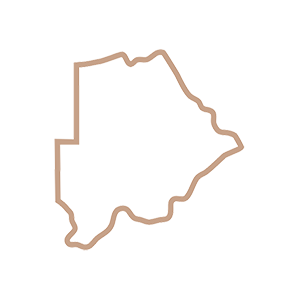
Exclusive wilderness
Home to Africa’s largest elephant population, along with lions, leopards, wild dogs, and abundant plains game.
The perfect combination
Intimate lodges and camps offer exclusive safari experiences in some of Africa’s most untouched wilderness.
What Makes the Okavango Delta Special?
Two things: the water and the way the land is managed.
The Delta in Motion
The annual flood turns dry savannah into a mosaic of channels, lagoons and islands, and the wildlife follows it. Drifting past elephants at eye level in a mokoro, a traditional dugout canoe poled by a guide who grew up on these channels, is the single experience we would protect in any Botswana itinerary.
The Luxury of Space
Then there is the concession system. Outside Moremi Game Reserve, the Delta is divided into large private concessions, each with just one or two small camps. That means off-road driving, night drives, walking safaris and sightings you do not share with a queue of vehicles. It is the reason the Delta costs what it does, and the reason it is worth it.
When is the Best Time to Visit the Delta?
The Okavango Delta offers something extraordinary in every season. The best time to visit depends less on the calendar and more on the experience you’re looking for.





Dry Season
May to October brings dry weather, clear skies and outstanding game viewing as wildlife gathers around permanent water across the Delta.
Peak Flood
June to August sees the annual flood reach its peak, creating ideal conditions for mokoro excursions and motorboat safaris through the waterways.
Green Season
November to April offers lush landscapes, newborn wildlife, exceptional birding and lower rates, with more land-based activities.
There is no bad month, only different versions of the Delta. We will tell you honestly which version your dates will bring.
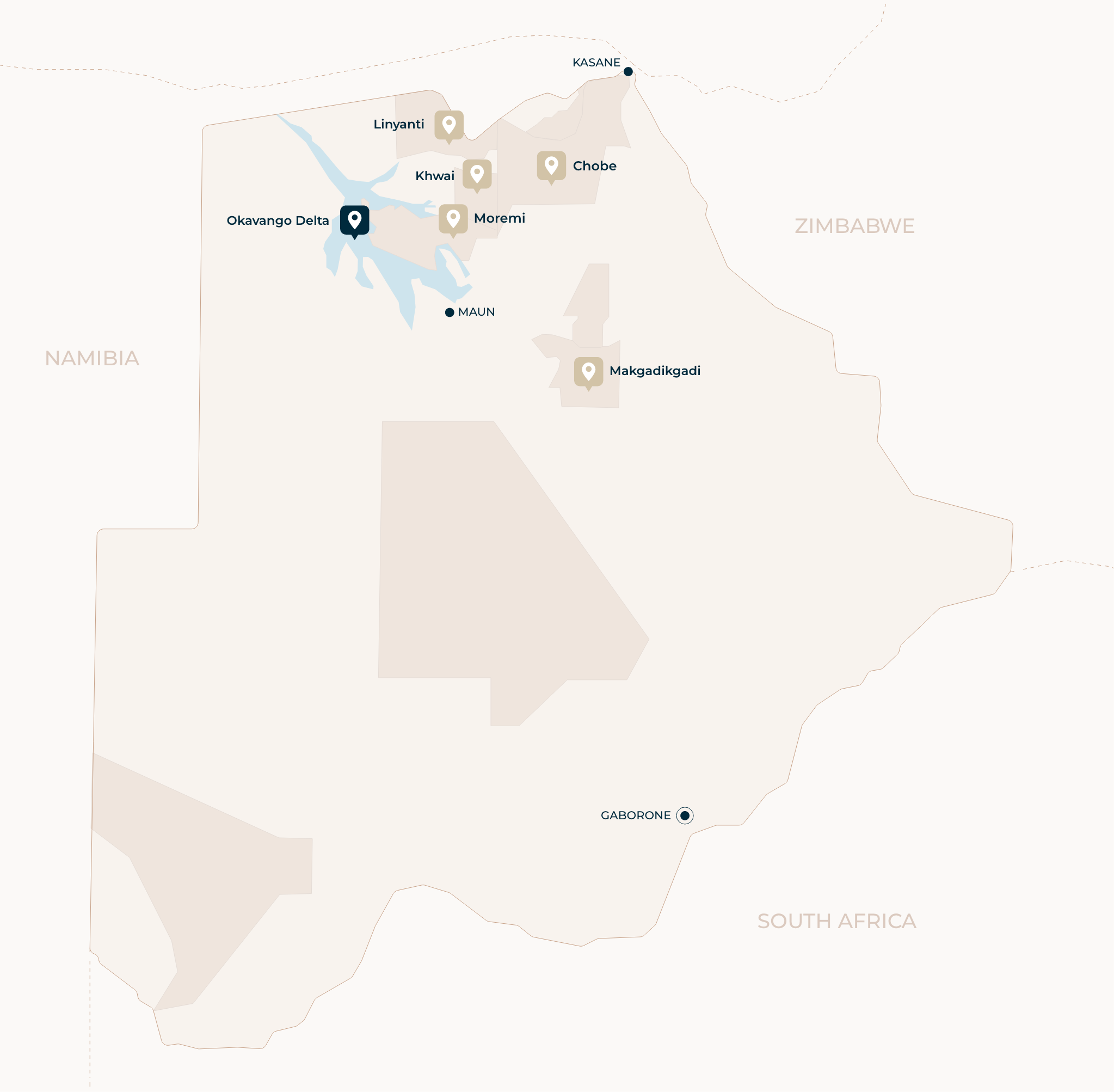
Where is Okavango Delta and what other regions does it pair well with?
Moremi Game Reserve protects the Delta’s eastern third, and the Khwai concessions sit on Moremi’s north-eastern border, so both are part of the wider Delta system. The Linyanti lies to the north-east, Chobe National Park beyond it, and the Makgadikgadi Salt Pans to the south-east.
Most seven to ten night itineraries combine the Delta with one or two of these, connected by short light aircraft hops.
Where to Stay in the Okavango Delta
Our Delta portfolio spans the concessions we rate most highly. On the water side: Wilderness Kwetsani and Little Tubu in the Jao concession area, and andBeyond Xaranna. For land and predator focus: Wilderness Qorokwe and Little Vumbura, andBeyond Nxabega and Sandibe on the Moremi border, and Sanctuary Stanley’s and Chief’s Camp. North Island Okavango adds hot air ballooning and helicopter flights to the usual land and water mix.
Ask us which suits your style; we have stayed in them, so the opinions come free.
Dulini Daunara Safari Camp
- Okavango Delta, Botswana
- 12 Guests
- 6 Beds
- 6 Baths
andBeyond Sandibe Under Canvas
- bordering Moremi Game Reserve, Okavango Delta, Botswana
- 3 Canvas Tents
Atzaro Okavango
- Okavango Delta, Botswana
- 8 Luxury Suites, 1 Luxury Family Suite
Mokolwane
- Xudum Private Concession (NG29), Okavango Delta, Botswana
- 7 Canvas Style Tents
Duke's East
- Okavango Delta, Botswana
- 4 stylish canvas tents
North Island Okavango
- Okavango Delta, Botswana
- 4 Tented Suites
Duke's Camp
- Okavango Delta, Botswana
- 8 Canvas Tents
Little Sable
- Khwai Private Reserve, Okavango Delta, Botswana
- 8 Traditional Tents
andBeyond Xaranna Okavango Delta Camp
- Okavango Delta, Botswana
- 9 Tented Suites
andBeyond Nxabega Okavango Tented Camp
- Okavango Delta, Botswana
- 9 Tents & 1 Family Tent
Wilderness Qorokwe
- Qorokwe Concession, Okavango Delta, Botswana
- 8 Tented Suites & 1 Family Tented Suite
- South - 6 Twin Tents, 1 Honeymoon Tent | North - 4 Twin Tents, 1 Honeymoon Tent & 2 Family Tents
- 6 Tents & 1 Family Tent
Sable Alley
- Khwai Private Reserve, Okavango Delta, Botswana
- 9 Tents, 1 Honeymoon Tent & 2 Family Tents
Tuludi
- Khwai Private Reserve, Okavango Delta, Botswana
- 6 Tented Rooms & 1 Tented Family Room
- 5 Meru-style Tents
Wilderness Chitabe
- Chitabe Concession, Okavango Delta, Botswana
- 8 Meru-Style Tents
Jao Camp
- Jao Concession, Okavango Delta, Botswana
- 5 Tents & 2 Villas
Kwetsani Camp
- Okavango Delta, Botswana
- 6 Luxury Tents
What Does an Okavango Delta Safari Cost?
The Okavango Delta is one of Africa’s most exclusive safari destinations, with rates reflecting its remote locations, exceptional guiding and intimate camps. Here’s what to expect when planning your stay.

All-inclusive stays
Accommodation, meals, drinks, twice-daily activities and most extras are included, making your stay simple from arrival to departure.

Nightly rates
Expect to pay between US$1,200 and US$4,000+ per person, per night, depending on the safari camp or lodge, season and level of luxury.
Air transfers
Light aircraft transfers are usually quoted separately, although many of our tailor-made itineraries include them as part of the journey.
Okavango Delta FAQs
What is a mokoro, and is it safe?
A mokoro is a shallow dugout canoe, today usually fibreglass for the trees’ sake, poled from the stern by a guide. It is the quietest way to move through the Delta and the closest you will get to its wildlife without fur. Guides read the channels and the animals constantly, keep sensible distances from hippos, and have been doing this their whole lives. It is a gentle, silent glide, not white-water sport.
Should you choose a water camp or a land camp?
Ideally, combine both. Water camps offer mokoro and boating experiences, while land camps are generally better for game drives and big-game viewing. If time allows, staying in two different areas gives you a more varied Okavango Delta safari.
What is a private concession, and why do they cost more?
A private concession is an exclusive safari area with limited camps and fewer vehicles. They often allow activities such as off-road driving, night drives and walking safaris. Rates are higher because access is restricted and guest numbers are kept low, creating a more private safari experience.
When does the flood arrive in the Okavango Delta?
The Okavango flood usually begins arriving between April and May, with water levels often peaking from June to August. Timing varies each year and between different areas of the Delta, so water-based activities depend on where and when you travel.
How many nights do you need in the Okavango Delta?
We recommend at least four nights in the Okavango Delta. Ideally, split your stay between two camps or different areas so you can experience a mix of landscapes, wildlife and activities. Three nights works for a shorter safari, while four to six nights gives you a much fuller experience.
More Botswana Safari Areas to Visit
Each area brings something new to your safari: different landscapes, different wildlife and different ways to experience them. See where else you could go.
Moremi Game Reserve
Khwai Private Reserve
Chobe National Park
Linyanti Concession
Makgadikgadi Salt Pans
Ready to Experience the Okavango Delta?
Tell us when you would like to travel and what matters most. We’ll create a Delta journey shaped around the season, your budget and the way you like to travel.