
Chobe National Park
The largest elephant population in Africa, best admired from a boat with a cold drink in hand. Some safari scenes you watch; Chobe’s, you float through.
The Chobe Experience
Chobe National Park anchors Botswana’s far north along the Chobe River, which forms the border with Namibia, and does things no other region here quite does.

Largest herds in Africa
Home to the largest elephant population in Africa, with herds gathering along the river in staggering numbers.
The view from the river
Famous for boat safaris that put you at water level as herds swim, drink and spar on the riverfront.

The easiest route in
Around 90 minutes by road from Victoria Falls, and served directly by Kasane’s international airport.
Where journeys begin, or end
Most itineraries spend two to three nights here, opening or closing a trip into the Okavango Delta or Linyanti.
What Makes Chobe Special?
Chobe’s reputation rests on two things: the scale of what you’ll see, and how close you’ll see it.
A Herd Like No Other
Elephants, at a scale that recalibrates your sense of the word herd. In the dry season, thousands move to the river daily, and a late-afternoon boat safari puts you among them: swimming calves, drinking bulls, and buffalo, hippo, crocodile and fish eagles filling every gap in the scene. Even our most travelled guests go quiet on that boat.
Golden Hour on the River
Chobe’s riverfront is also one of Africa’s great photographic settings: low light, water reflections and animals approaching the boat rather than fleeing the vehicle. If a single image sends people to Botswana, it was probably taken here around 5pm.
When is the Best Time to Visit Chobe?
Chobe offers a different experience depending on the month. The best time to visit depends less on the calendar and more on the experience you’re looking for.





Dry Season
June to October, when the interior dries out and wildlife concentrates on the river in extraordinary numbers. October is the most intense, and the hottest.
Green Season
November to April disperses the game but delivers lush landscapes, newborn antelope, superb birding and quieter waters, at friendlier rates.
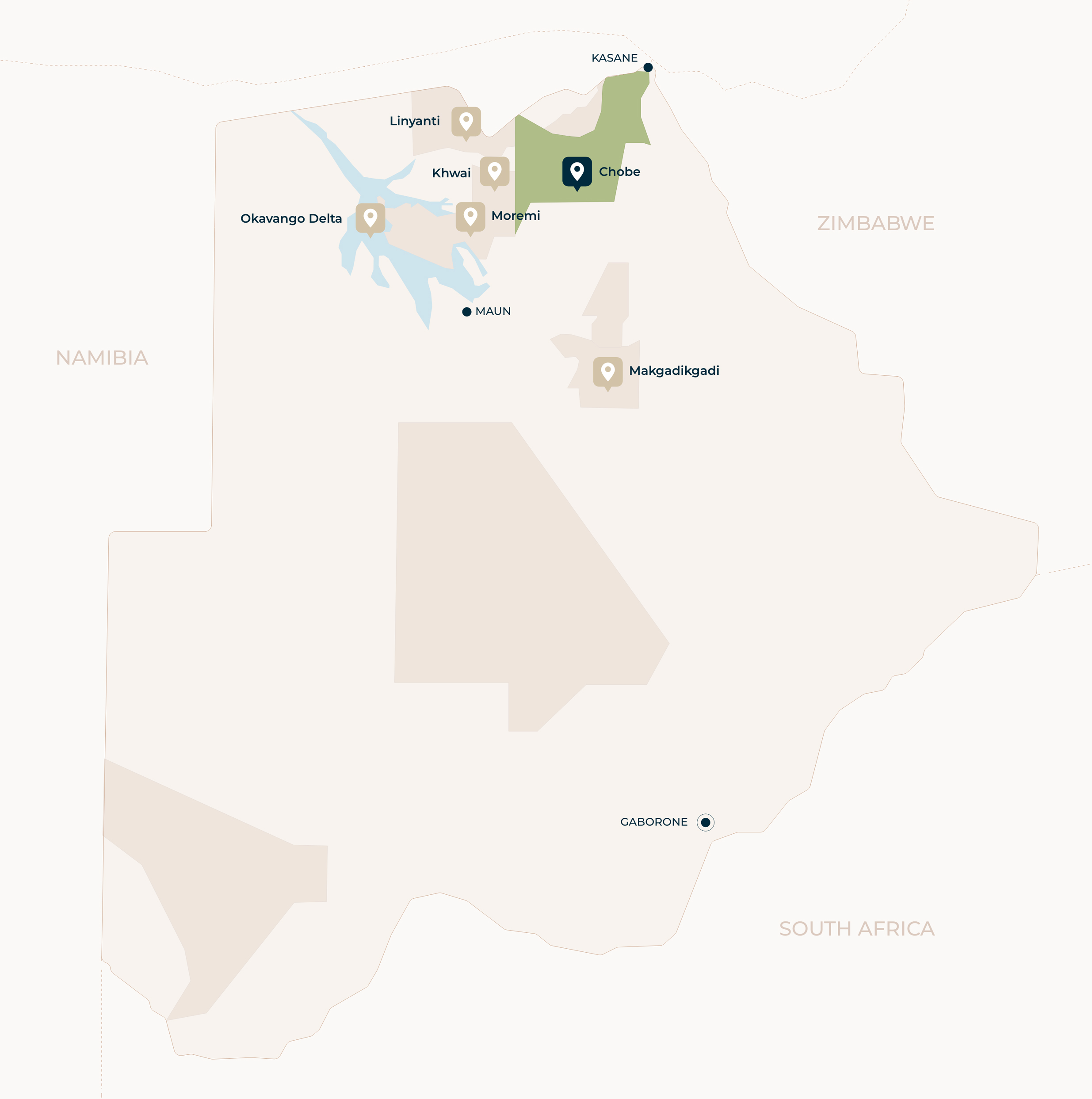
Where is Chobe Game Reserve and what regions does it pair well with?
Chobe National Park anchors Botswana’s far north along the Chobe River, which forms the border with Namibia, with Kasane on its doorstep and Victoria Falls around 90 minutes away by road. The Okavango Delta and Linyanti sit to the south-west, an easy flight away.
Most itineraries spend two to three nights in Chobe, typically opening or closing a trip that continues into the Delta or Linyanti.
How Do You Get to Chobe?
Getting to Chobe National Park is straightforward, with Kasane serving as the main gateway. You can arrive by air or travel by road, depending on where your journey begins.
Fly into Kasane
Kasane’s international airport sits right on the park’s doorstep, making it the quickest and most common way in.

By road from the falls
A road transfer from Victoria Falls takes about 90 minutes, border crossing included, and it’s genuinely effortless.
The natural hinge
The short distance between the two makes Chobe the easiest link between a Falls visit and a Botswana safari.
Boat Safari or Game Drive
The wildlife is effectively shared; the rulebook is not.
By Boat
Boat safaris own the golden hours, when everything comes to drink, from swimming elephants to fish eagles overhead.
By Land
Game drives cover the riverfront tracks and the park’s interior, where lion prides follow the buffalo herds daily.
Or, do both!
Our lodges schedule the two in rotation, and the combination is the best full-day out in northern Botswana.
Where to Stay in Chobe
Sanctuary Chobe Chilwero sits on a rise at the park’s edge with sweeping river views, a spa, and the polish to open or close a honeymoon. Ngoma Safari Lodge, in the quieter Chobe Forest Reserve at the park’s western end, trades the busier Kasane riverfront for private-feeling game viewing and enormous horizons. Two different Chobes; we will tell you which fits your trip.
Chobe Game Lodge
- Chobe National Park, Botswana
- 35 Standard Rooms, 4 Triple Rooms, 4 Family Suites & 1 Honeymoon Suites
- 4 Master Suites & 10 Standard Suites
What Does a Chobe Safari Cost?
Chobe is generally the most accessible of Botswana’s regions on price, thanks to easier logistics and a wider spread of lodges. Here’s what to budget for.

Nightly Rates
All-inclusive rates run broadly from the mid hundreds to around $1,500 per person per night at the luxury end.
Park Fees
Quoted separately from nightly rates, park fees apply on top of your accommodation cost across the park.
Lower flying costs
Road access from Victoria Falls also trims flying costs from an itinerary, adding to Chobe’s overall value.
Chobe National Park FAQs
How many elephants are in Chobe National Park?
Chobe is famous for one of the largest concentrations of elephants in Africa. Northern Botswana supports well over 100,000 elephants, with huge herds gathering along the Chobe River during the dry season, particularly from June to October.
Can you combine Chobe with Victoria Falls?
Yes, Chobe and Victoria Falls are very easy to combine. Victoria Falls is around two hours from Chobe by road and border transfer, making the two destinations a natural pairing. We usually recommend combining a Chobe safari with two or three nights at Victoria Falls.
Is a boat safari better than a game drive in Chobe?
Neither is better, they offer completely different perspectives. Chobe River boat safaris are exceptional for elephants, hippos and wildlife along the water, while game drives take you deeper into the park in search of predators and other big game. Ideally, experience both.
Is Chobe National Park crowded?
Chobe can be busy, particularly around the riverfront during peak safari season. Choosing the right lodge, travelling outside peak times or staying in quieter areas of the Chobe region can give you a more exclusive safari experience.
How many nights do you need in Chobe?
We recommend two to three nights in Chobe. This gives you enough time for both game drives and a Chobe River boat safari. Three nights is ideal if you want a more relaxed pace before continuing to the Okavango Delta or Victoria Falls.
More Botswana Safari Areas to Visit
Each area brings something new to your safari: different landscapes, different wildlife and different ways to experience them. See where else you could go.
Okavango Delta
Moremi Game Reserve
Khwai Private Reserve
Linyanti Concession
Makgadikgadi Salt Pans
Ready to Experience Chobe National Park?
Tell us when you would like to travel and what matters most. We’ll shape a Chobe itinerary around the season, your budget and the way you like to safari.