Linyanti is a private wilderness region in Botswana’s far north, lying between Chobe National Park and the Okavango system along the Linyanti River and its marshes.
Elephant herds at scale
Known for enormous dry season elephant concentrations, with herds moving along the same corridors that feed Chobe.
Serious predator country
Strong lion and African wild dog populations roam a small number of remote, exclusive camps across the region.
Walking safaris & night drives
Because the land is private concessions, offroad driving, night drives and walking are all permitted here.
A second-trip favourite
Two to three nights pairs superbly with the Okavango Delta, usually our first suggestion for returning Botswana travellers.
What Makes Linyanti Special?
Two things set Linyanti apart: how few people share it, and how seriously it delivers on predators.
Purposeful Scarcity
A handful of camps share a wilderness the size of a small country, so a lion sighting here is your lion sighting. The elephant numbers rival Chobe’s, because this is the same population moving along ancient corridors between the river systems, minus the boats and the audience.
Serious Predator Country
Linyanti and Savuti corridor has one of southern Africa’s healthiest wild dog populations, alongside large lion prides and a strong leopard density, with the freedom to follow them off-road and after dark.
When is the Best Time to Visit Linyanti?
Linyanti offers a different experience depending on the month. The best time to visit depends less on the calendar and more on the experience you’re looking for.
Dry Season
Green Season
Dry Season
June to October is prime, when the interior dries and wildlife stacks up along the Linyanti River in numbers that feel almost theatrical, with October the crescendo.
Green Season
The green season disperses the game and some camps close in the wettest months, but early and late shoulder dates offer excellent value and beautiful light.
Where is Linyanti and what regions does it pair well with?
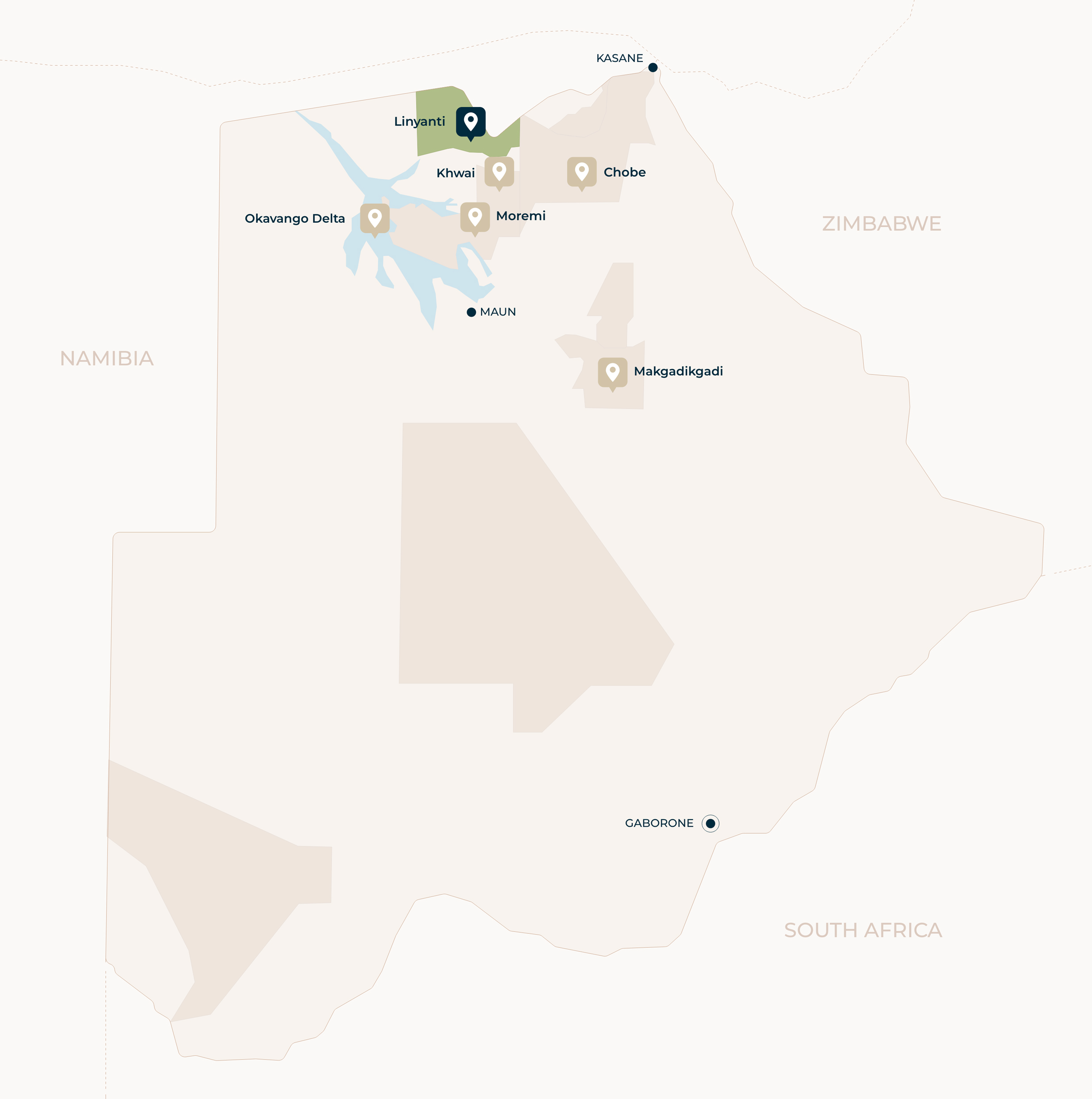
The Linyanti sits between Chobe National Park and the Okavango system, along the Linyanti River and its marshes, with the Selinda Reserve just to the west and the Savuti Channel to the south. Maun and Kasane are the usual gateways in, both a short flight away.
Two to three nights here pairs superbly with the Okavango Delta, and it’s usually our first suggestion for returning Botswana travellers.
No roads in means no day visitors, which is rather the point of Linyanti in the first place.
By air only
Roughly 45 minutes from Maun or 30 minutes from Kasane, and light aircraft is the only way in.
Seamless connections
The flight connects easily with Delta and Khwai airstrips, keeping onward travel simple and short.
A natural middle chapter
Slots neatly into the middle or end of a longer itinerary, without adding any real extra travel time.
Linyanti or Chobe?
The wildlife is effectively shared; the rulebook is not.
Chobe is a national park
This means it is easily accessible, boat-based, occasionally busy, and gentler on the budget. It’s the natural choice for a first trip, especially one with Victoria Falls attached.
Linyanti is private
This means it is remote, exclusive, off-road and after-dark capable, but at a premium. It suits a second trip, or any trip where solitude is the actual luxury you’re buying, rather than an afterthought.
Where to stay in Linyanti
Wilderness King’s Pool overlooks a Linyanti River oxbow lagoon with a level of comfort that borders on the unreasonable, including sunken hides for eye-level elephant viewing. Linyanti Ebony, from African Bush Camps, is a warm, family-friendly camp on raised decks overlooking the Linyanti marshes in the Chobe Enclave. Both give you the region’s freedoms; they differ in flavour and price, and we know both first-hand.
This is a premium region: exclusivity is the product. Here’s what to budget for.
Nightly Rates
All-inclusive rates run from roughly $1,000 at intimate camps to $3,500+ at flagship properties in peak season.
Green Season Savings
Rates drop meaningfully in the green season, making the same exclusive camps notably more accessible per night.
Flight Access
Light aircraft access is required to reach the region, and is quoted separately unless already packaged in.
Linyanti Concession FAQs
Where is Linyanti in Botswana?
Linyanti lies in northern Botswana, between the Okavango Delta and Chobe National Park. It is a remote safari area known for rivers, floodplains, woodland and very low visitor numbers.
What wildlife is Linyanti known for?
Linyanti is especially famous for elephants and predators. Lions, leopards, wild dogs and large herds of buffalo are regularly seen, particularly during the dry season when wildlife gathers around permanent water.
When is the best time to visit Linyanti?
The dry season from June to October is particularly good for wildlife viewing in Linyanti. Animals concentrate around rivers and waterholes, although the green season offers beautiful scenery, birdlife and fewer visitors.
How many nights should you spend in Linyanti?
Three nights is ideal for most Linyanti safaris. It gives you enough time to enjoy the area without rushing and combines very well with the Okavango Delt
Is Linyanti quieter than Chobe?
Yes. Linyanti generally offers a much more exclusive safari experience than the Chobe riverfront. Camps are more widely spaced and vehicle numbers are lower, making it a great choice for travellers wanting fewer crowds.
More Botswana Safari Areas to Visit
Each area brings something new to your safari: different landscapes, different wildlife and different ways to experience them. See where else you could go.
Tell us when you would like to travel and what matters most. We’ll shape a Linyanti itinerary around the season, your budget and the way you like to safari.
We use cookies to enhance your experience on our website. By continuing to browse, you consent to our use of cookies. You can manage your cookie preferences at any time through your browser settings. Read our Cookie Policy and Privacy policy