
Where to Travel in Botswana
Across floodplains, wildlife-rich reserves and ancient salt pans, Botswana’s contrasting landscapes reveal a different character at every stop.
Botswana’s Top 6 Destinations
Six extraordinary safari regions, one very good problem: choosing between them. Our specialists have slept in the tents, ridden the mokoros and taken the night drives. Here’s where to go, and why.
Botswana’s Safari Regions
Compared by people who have been there
Every operator will tell you Botswana is diverse. What matters is what that diversity means for your trip: water or land, parks or private concessions, big scenery or big cats. Below is the honest version of each region. Continue reading to learn more including when to go, what it costs and which camps we rate.
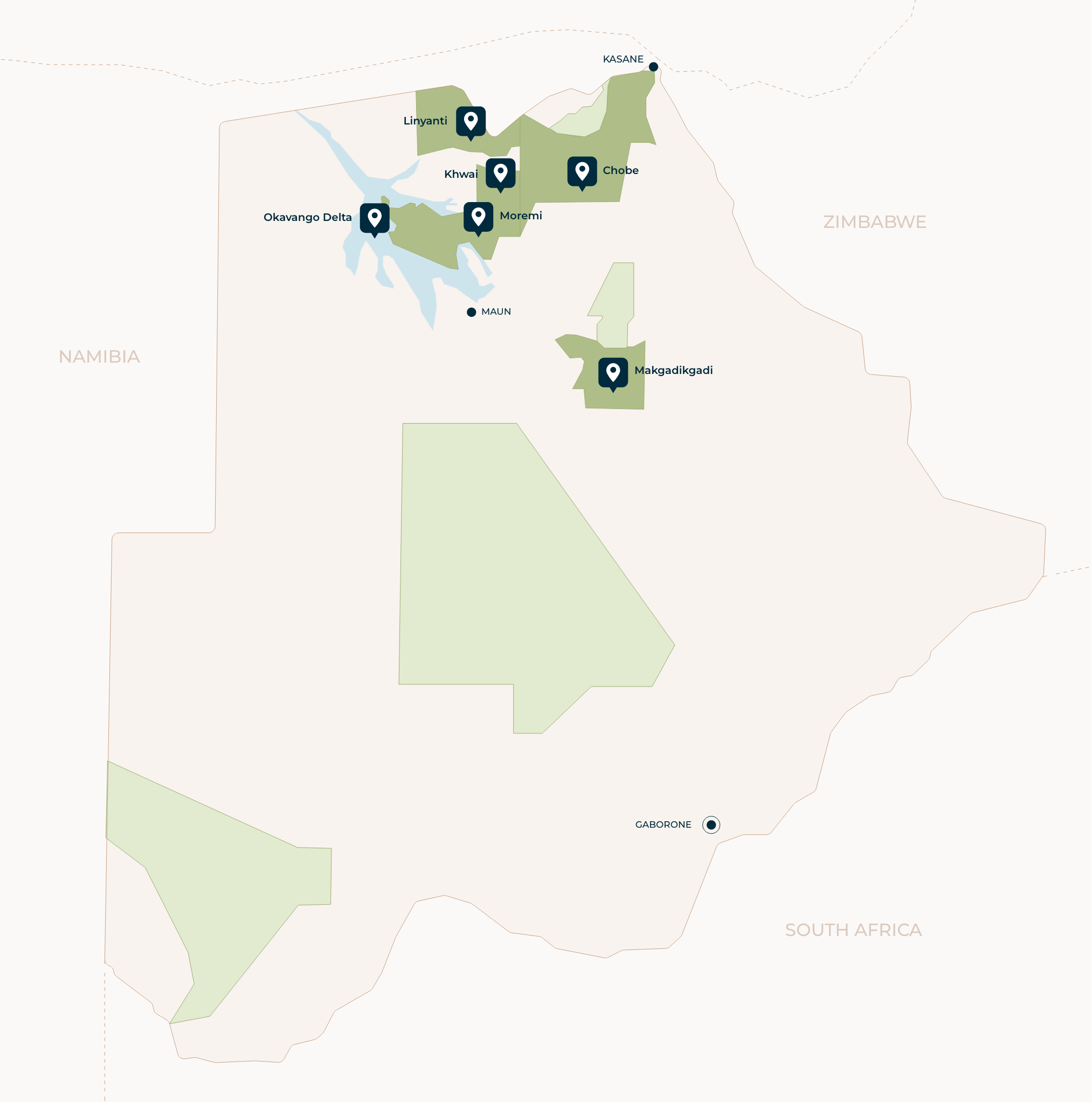
Mapping the Regions
Botswana’s safari circuit centres on six regions in the north of the country. Most first-time itineraries combine two or three, typically the Delta for water-based safari, Chobe or the Linyanti for elephants, and Khwai or Moremi for predators. Light aircraft connect them all, so pairing regions is easy.
Choosing the right combination of regions for your dates, budget and interests is where a human who knows the ground earns their keep.
Okavango Delta
An inland delta that never reaches the sea, and the reason most people come to Botswana. The magic here is the water: drifting past elephants at eye level in a mokoro is the single experience we’d protect in any itinerary. Much of the Delta is divided into private concessions, which means fewer vehicles, off-road driving and sightings you don’t share.
Moremi Game Reserve
The protected eastern heart of the Delta, and pound for pound some of the best game viewing in Africa. Floodplain, forest and savannah sit side by side, which is why the predator density is what it is. If your priority is lions and leopards rather than lounging, start here.
Khwai
Two community-linked concessions on Moremi’s doorstep with one big advantage: fewer rules. Night drives, off-road driving and walking safaris are all on the table here, none of which the national parks allow. Your camp fees also flow directly to the Khwai community, which we think is exactly how safari should work.
Chobe National Park
Home to the largest elephant population on the continent, best seen from the water. A boat safari on the Chobe River at golden hour, surrounded by swimming elephants, is one of those scenes that makes even our most travelled guests go quiet. Easily paired with Victoria Falls next door.
Linyanti
Chobe’s wild, private back garden. The same elephant numbers without the vehicles, plus a serious reputation for wild dog and lion. Camps here are few, remote and exclusive, which is precisely the point. For second-time visitors to Botswana, this is usually our first suggestion.
Makgadikgadi Salt Pans
The counterpoint to all that water: an ancient lakebed the size of Portugal, now a shimmering white horizon. Come for meerkats, desert-adapted wildlife, quad biking across the pans and, in the green season, one of Africa’s great zebra migrations. Two nights here changes the whole shape of a trip.
How to Combine Botswana’s Regions
A Botswana safari rewards those who plan with intention. Across a handful of regions, each with its own character, the country’s private guides and specialists shape a route that reflects both the landscape and the traveller.
Seamless connections
Explore the Okavango Delta by mokoro or boat, drifting through lily-filled channels surrounded by wildlife and birdlife.
Deliberate contrast
From the Okavango Delta’s floodplains to the elephantrich Chobe River and the vast Makgadikgadi Salt Pans.

Considered planning
Home to Africa’s largest elephant population, along with lions, leopards, wild dogs, and abundant plains game.
Planning Your Botswana Safari
Where should a first-time visitor to Botswana go?
Start with the Okavango Delta, then add one contrasting region. The classic first-timer combination is three or four nights in a Delta concession, two or three nights in Chobe or the Linyanti for elephants, and, if time allows, two nights in the Makgadikgadi for the desert. That gives you water, land and salt pan in a single trip. If predators top your wish list, swap Chobe for Khwai or Moremi. Our specialists will tell you honestly which combination suits your dates, because the right answer in July is not the right answer in February.
What is the difference between the Okavango Delta and Moremi Game Reserve?
Moremi is part of the Delta: it protects the eastern section, while the rest of the Delta is divided into private concessions. The practical difference is the rules. Moremi is a public reserve, so no off-road driving and no night drives, but exceptional game density and slightly gentler prices. The private concessions cost more and give you exclusivity, off-road sightings and activities the reserve cannot offer. Many of our favourite itineraries include both, and we’ll happily argue the case for either over a phone call.
How many nights do you need for a Botswana safari?
Seven to ten nights covers two or three regions well. Anything under five nights forces hard choices, and Botswana is not a destination to rush: light aircraft transfers between regions take under an hour, but each camp deserves at least two nights, ideally three. Ten nights is the sweet spot for the full water, wildlife and desert arc. If you only have four or five nights, we’d rather build you one region done well than three done badly.
When is the best time to visit Botswana?
May to October is the dry season and the classic choice: wildlife concentrates around permanent water, skies stay clear and the Delta’s flood typically peaks between June and August. November to April, the green season, brings dramatic skies, newborn animals, superb birdlife and noticeably lower rates, and it is the season for the zebra migration and flamingos on the pans. There is no bad time, only trade-offs, and which trade-off suits you is a conversation worth having with someone who has travelled in both.
Do you need to visit more than one region in Botswana?
No, but most travellers do, and for good reason. Botswana’s regions are genuinely different from one another: a mokoro through Delta channels, a river cruise among Chobe’s elephants and a night under the stars on the Makgadikgadi are three different trips wearing one country’s name. The flying distances are short, so combining regions adds experience without adding much travel time. If your budget only stretches to one region, choose the Delta and do it well.
Ready to step into Botswana?
From the waterways of the Okavango Delta to the wildlife-rich plains of Chobe, we’ll design your perfect Botswana safari, balancing adventure, comfort, and unforgettable moments in the wild.